Key takeaways
- Best fingers: index or middle. Ring finger is a fine backup. Skip the pinky and thumb.
- Best hand: non-dominant. Less movement means fewer false steps and fewer scratches.
- Fit: snug enough that it doesn’t spin, loose enough to pass your knuckle with a little effort.
- Take it off for heavy lifting, saunas, hot tubs, power tools and medical scans.
- Wear it to bed. Overnight data is where rings beat watches.
On this page
Which finger should I wear my smart ring on?
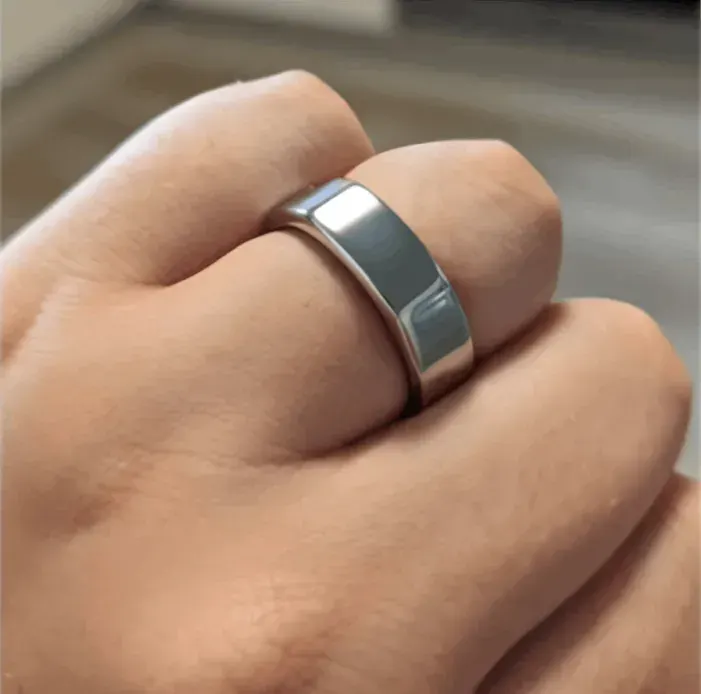
Wear your smart ring on your index or middle finger. Those fingers usually give the optical sensor the strongest, steadiest pulse signal, and they hold the ring in place well. The ring finger is a fine second choice. The pinky is often too thin, and the thumb moves too much.
Why does finger choice matter so much? A ring’s heart-rate sensor shines light into your skin and reads tiny changes in blood flow. A finger with good blood flow and a stable fit gives a cleaner signal. A finger where the ring slides or rotates lets outside light leak in, which adds noise.
| Finger | Signal | Fit stability | Our take |
|---|---|---|---|
| Index | Strong | Good | Best for most people |
| Middle | Strong | Best | Best if index bumps into things |
| Ring | Good | Good | Fine backup, classic look |
| Pinky | Weaker | Loose on many people | Avoid |
| Thumb | Variable | Poor | Avoid |
Pick one finger and stick with it. Switching fingers changes your baseline, so week-to-week trends stop lining up.
Which finger should I wear my COLMI smart ring on?
For a COLMI ring, the same rule applies: index or middle finger, sensor bump facing your palm. COLMI retailer listings name the index, middle and ring finger as recommended spots. Measure the exact finger you’ll use before ordering, because COLMI sizes are fixed.
COLMI rings start at US size 7 (some models at 8 or 10), so people with slim fingers often have better luck on the index or middle finger than on the ring finger. Our COLMI size chart shows each size’s inner diameter.
Should I wear my smart ring on my dominant or non-dominant hand?
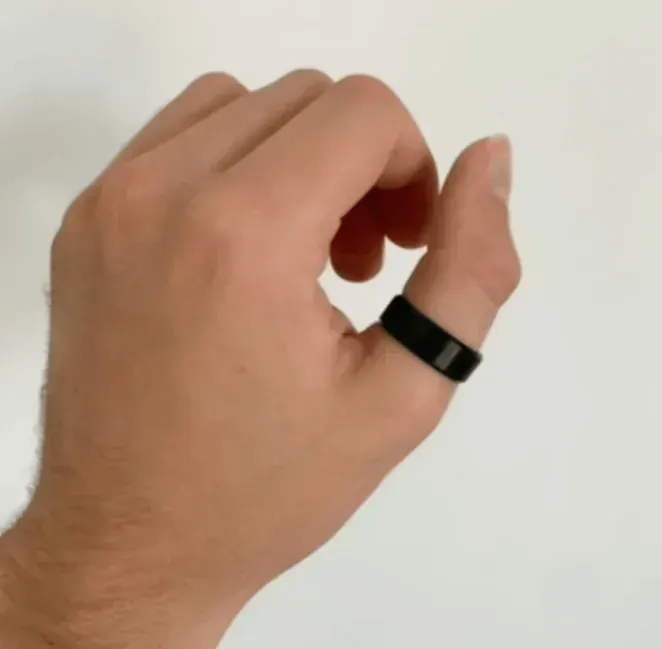
Wear it on your non-dominant hand: your left hand if you’re right-handed. Your dominant hand moves more all day, which can add false steps and noisy heart-rate readings, and it’s the hand that bangs into door handles, tools and gym equipment.
There are two exceptions worth knowing:
- If you already wear a watch on your non-dominant wrist and both devices track steps, you may get double-counting in apps like Apple Health. Pick one device as your main step source.
- If your non-dominant hand carries a wedding band, it’s fine to stack on a different finger of the same hand, or move the smart ring to your dominant hand and accept a little extra motion noise.
How tight should a smart ring be?
A smart ring should feel snug but comfortable: it shouldn’t spin on its own, and it should pass your knuckle with a little resistance. If it leaves a deep dent after an hour, it’s too tight. If you can rotate it with zero effort, it’s too loose for good readings.
Fingers change size through the day. They shrink in the cold and in the morning, and swell in heat, after exercise and after salty meals. A ring that’s perfect at breakfast can feel tight by dinner. That’s why sizing in the evening, at room temperature, works best.
Where should you not wear your smart ring?
Take your smart ring off for heavy weightlifting, saunas, hot tubs, power tools and medical scans. Those are the situations that damage rings or hurt fingers. Everyday handwashing, showers and swimming are usually fine if your ring is water-rated.
| Situation | Why to take it off |
|---|---|
| Heavy lifting (barbells, kettlebells) | Knurled bars scratch the finish and the ring can pinch skin under load |
| Sauna, hot tub, steam room | Heat is hard on small lithium batteries and seals |
| Power tools and heavy manual work | Rings can catch on equipment; vibration and impacts can damage the ring |
| MRI scans and surgery | Metal and electronics aren’t allowed; follow your care team’s instructions |
| When your finger is swollen or injured | A tight ring can cut off circulation |
| Contact sports | A ring can injure your finger in a fall or tackle |
When you take it off, put it in its case or charger. Rings are small and very easy to lose on a gym bench or by a sink.
Can you wear a smart ring to the gym?
Yes, for most workouts. Running, walking, cycling, yoga, classes and machine work are fine. Take it off for heavy free-weight lifting, where the bar presses the ring into your finger. Many lifters switch the ring to their non-dominant index finger and remove it only for the heaviest sets.
If you track workouts, start a workout session in the app before you begin. That gives cleaner heart-rate data than relying on all-day tracking alone.
Wearing it while you sleep
Wear your smart ring every night. Overnight data, like resting heart rate and sleep patterns, is where rings do their best work, because your hand is still and the fit is stable. A ring is also easier to sleep in than a bulky watch.
If your fingers swell at night, wear the ring on a slightly larger finger or loosen your evening routine (less salt, cooler room). Never sleep in a ring that feels tight.
Common mistakes to avoid
Most “my ring is inaccurate” complaints trace back to how it’s worn, not the sensor. These are the habits that cause the most trouble.
- Wearing it loose for comfort, then wondering why readings jump around.
- Rotating it so the sensor ends up on top of the finger.
- Switching fingers or hands every few days.
- Leaving it on for heavy lifting and scratching the finish.
- Measuring size with cold hands in the morning.
Expert tips
- Do a weekly “spin check”: if the ring rotates freely, it’s time to move fingers or resize.
- Keep the inside of the ring and your skin clean and dry to avoid irritation.
- If you get skin redness, give that finger a day off and swap to the other hand.
Frequently asked questions
Can I wear a smart ring with my wedding ring?
Yes. Wear the smart ring on a different finger, usually the index or middle finger, so the two rings don’t rub. Stacking them on one finger can scratch both and loosen the sensor’s contact.
Can I wear a smart ring on my thumb?
You can, but it’s not ideal. The thumb moves a lot and the ring tends to shift, which makes heart-rate readings less reliable. Index or middle finger is better.
Should I take my smart ring off at night?
No, overnight is when a ring collects its most useful data. Only take it off if it feels tight or your finger swells.
Can I wear a smart ring while pregnant?
Many people do, but fingers often swell during pregnancy. Choose comfort over a snug fit, remove it if it feels tight, and ask your provider about any health readings.
Do I need to take my smart ring off at airport security?
Usually not, since small jewelry can often stay on. Officers can still ask you to remove it, so follow their instructions.
Does it matter which way the smart ring faces?
Yes. Most rings have a sensor bump on the inside that should sit on the palm side of your finger. Many rings also have a marker to help you line it up.