Key takeaways
- Steps: 11,974 vs 11,463 on a Pixel watch in one day of hands-on testing (R02, same core hardware as the R07).
- Heart rate and blood oxygen showed no significant gaps vs the watch in daily spot checks, per the same tester.
- Sleep: the ring logged 7 h 52 min vs the watch’s 7 h 10 min and called the night 99% efficient.
- Fit, cold fingers, movement and tattoos affect any optical sensor. Snug fit and a steady finger help most.
- Use it for trends over a week. Never use it to diagnose anything.
On this page
The short version: accuracy by metric
The COLMI ring is most accurate for step trends and resting heart rate, fair for workout heart rate and total sleep time, and least reliable for sleep stages and calories. This table sums it up so you know which numbers to lean on.
| Metric | What testing shows | Our trust level | Best use |
|---|---|---|---|
| Steps | Within about 5% of a Pixel watch on a test day | High | Weekly step goals |
| Resting heart rate | No significant gaps vs a watch in spot checks | Good | Trends over weeks |
| Workout heart rate | Optical sensors lag during intervals and lifting | Fair | Rough effort level |
| Total sleep time | Overcounted by about 40 minutes on a test night | Fair | Bedtime consistency |
| Sleep stages | Fewer REM phases than a watch detected | Low | Ignore night-to-night swings |
| Calories | Shows exercise calories only | Low | Not for diet planning |
Source for the test figures: Galaxus editor Lorenz Keller’s two-week hands-on with the COLMI R02, compared against a Google Pixel watch. The Gadgetbridge project notes that the R07 shares the R02’s core hardware, which is why we treat those findings as a close guide for the R07.
How ring sensors work
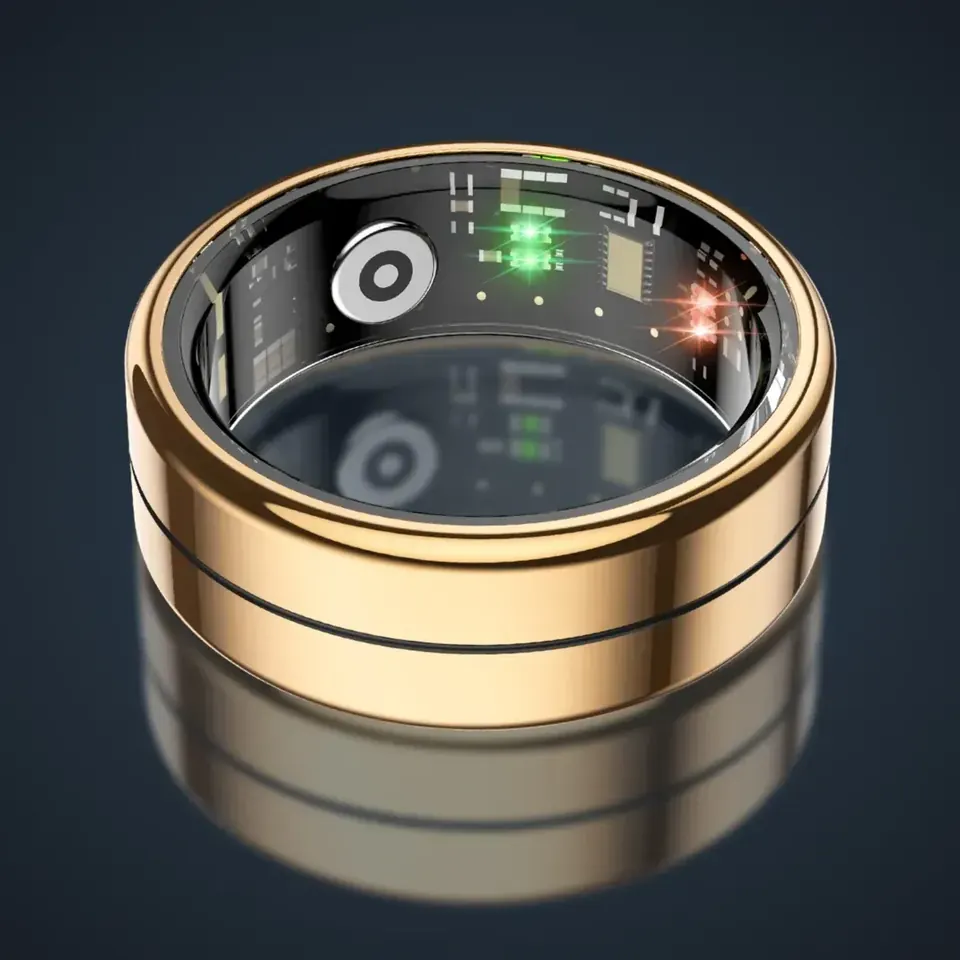
Smart rings use two sensors: an optical (PPG) sensor that reads blood flow with light, and an accelerometer that reads movement. Everything you see in the app, from heart rate to sleep stages, is calculated from those two signals.
PPG (photoplethysmography): small LEDs shine into your finger. Each heartbeat pushes a little more blood through the tissue, which changes how much light bounces back. The sensor picks up that pulse and software counts the beats.
Accelerometer: a tiny chip senses movement in three directions. Steps come from the rhythm of walking. Sleep and wake are estimated partly from how still you are.
The important point: sleep stages aren’t measured directly. A sleep lab uses brain-wave sensors (EEG). A ring guesses stages from heart-rate and movement patterns. That’s true for a $40 ring and a $349 ring alike. Premium rings just have better algorithms behind the guess.
What independent reviewers found
The best hands-on data for this hardware comes from a two-week Galaxus test of the COLMI R02 against a Google Pixel watch. Steps and heart rate held up for everyday use. Sleep did not. Owner reviews of the QRing app tell a similar story.
Steps. On one day the ring counted 11,974 steps and 7.67 km. The watch counted 11,463 steps and 7.75 km. That’s a gap of about 4.5% in steps, which is normal between any two trackers.
Heart rate and blood oxygen. In random daily comparisons, the tester saw no significant deviations from the watch and judged both fine for everyday use.
Sleep. This is where it broke down. The ring logged 7 h 52 min of sleep. The watch logged 7 h 10 min. The ring counted total time in bed as sleep, found far fewer REM phases, and rated the night “excellent” with 99% efficiency. The watch scored the same night 82 out of 100.
Owner reports. QRing app reviews repeat the sleep complaint in other forms: sleep sessions that end when you get up for the bathroom, missed naps, and sleep scores that drop on nights that felt fine.
What throws readings off
Fit is the single biggest factor. A loose ring lets light leak in and lets the sensor slide, which corrupts the signal. Cold fingers, hard hand movement, tattoos and very dark or very thick skin can also make optical readings harder.
| Factor | Why it matters | What to do |
|---|---|---|
| Loose fit | Light leaks in, sensor shifts | Size down if it spins freely |
| Cold fingers | Less blood flow near the surface | Warm up hands before spot checks |
| Hard hand movement | Motion noise swamps the pulse signal | Use sports mode; expect lag in lifting |
| Tattoos under the sensor | Ink absorbs light | Wear it on an un-inked finger |
| Skin tone | Darker skin absorbs more green light, a known PPG challenge | Snug fit helps; compare trends, not single readings |
| Low battery | Some devices sample less when low | Keep it above about 20% |
How to get better readings
Wear the ring snug on your index or middle finger with the sensor on the palm side, keep it charged, and judge results over a week. Those three habits fix most of the “bad data” complaints owners post online.
- Get the size right. It should slide over your knuckle with a little resistance and not spin on its own.
- Choose the best finger. Index or middle finger gives a stronger signal than the pinky.
- Sensor facing your palm. Rotate it back into place if it drifts.
- Warm, still hands for spot checks. Sit still for a minute before a manual reading.
- Sync daily. Open QRing each morning so data doesn’t pile up on the ring.
- Look at weekly averages. One odd night or one odd reading means very little.
Our COLMI smart ring size chart helps with step one, which matters more than any other.
When to trust it, and when not to
Trust the COLMI ring for trends: more steps this week than last, resting heart rate creeping up when you’re run down, going to bed later on weekends. Don’t trust it for single readings, sleep-stage detail, calorie budgets or anything health-related.
A good mental model: the ring is a fitness diary that fills itself in. It’s great at telling you that something changed. It isn’t built to tell you why, or whether it matters medically. If a trend worries you, that’s a cue to talk to a professional, not to dig deeper into the app.
Common accuracy mistakes
The biggest mistake is comparing one night or one reading against another device and deciding the ring is “wrong.” All consumer trackers disagree with each other a little. Consistency over time matters more than matching any single number.
- Comparing your ring with a friend’s ring. Different fingers and fits give different numbers.
- Wearing it loose “for comfort,” then blaming the sensor.
- Reading REM and deep sleep percentages as facts.
- Using exercise calories as your total daily burn. The app doesn’t count resting metabolism.
When to see a doctor: the R07 is a wellness gadget, not a medical device. If you feel chest pain, shortness of breath, fainting, a racing or very slow heartbeat, or your readings keep looking unusual, talk to a doctor or call 911 in an emergency. Don’t wait for an app to confirm how you feel.
Is the COLMI ring a medical device?
No. The COLMI R07 is a consumer wellness and fitness wearable. Its readings are estimates for general information only. It isn’t FDA cleared or approved for any medical use, and it can’t diagnose, detect or monitor conditions like sleep apnea, AFib, high blood pressure or diabetes.
The FDA’s general wellness guidance describes this category: low-risk products meant to support a healthy lifestyle, not to diagnose or treat disease. That applies to premium rings too. If you need medical monitoring, ask your doctor about devices built and cleared for that job.
Sources we used
Every fact on this page comes from these sources, checked in November 2026. Anything not from a source is labeled as our opinion.
- Galaxus hands-on review of the COLMI R02 (Lorenz Keller)
- Gadgetbridge: COLMI and Yawell rings support notes
- QRing on the Apple App Store
- FDA: General Wellness Policy for Low Risk Devices
Frequently asked questions
How accurate is the COLMI ring heart rate?
For resting and everyday heart rate, hands-on testing of the sibling R02 found no significant gaps vs a Pixel watch. During hard intervals or weight training, optical sensors lag, so treat workout readings as rough.
Is COLMI sleep tracking accurate?
Total sleep and bedtime trends are usable. Sleep stages are not reliable, and testing found the ring can count time lying awake in bed as sleep, so totals may run high.
Can the COLMI ring detect health problems?
No. It’s a wellness gadget, not a medical device. It can’t diagnose or detect sleep apnea, heart rhythm problems or any other condition. See a doctor about symptoms.
Why does my COLMI ring show different steps than my phone?
Your phone counts only when it’s in your pocket, and the ring counts hand movement too. Driving, cooking or clapping can add ring steps, while pushing a cart can hide them. Compare weekly averages.
Does skin tone or a tattoo affect COLMI readings?
It can. Optical sensors read light reflected through skin, and tattoo ink or darker skin absorbs more light. A snug fit and wearing it on an un-inked finger help most.
Is the COLMI ring FDA approved?
No. We found no FDA clearance or approval for the COLMI R07. It’s sold as a general consumer wellness device, like most smart rings.